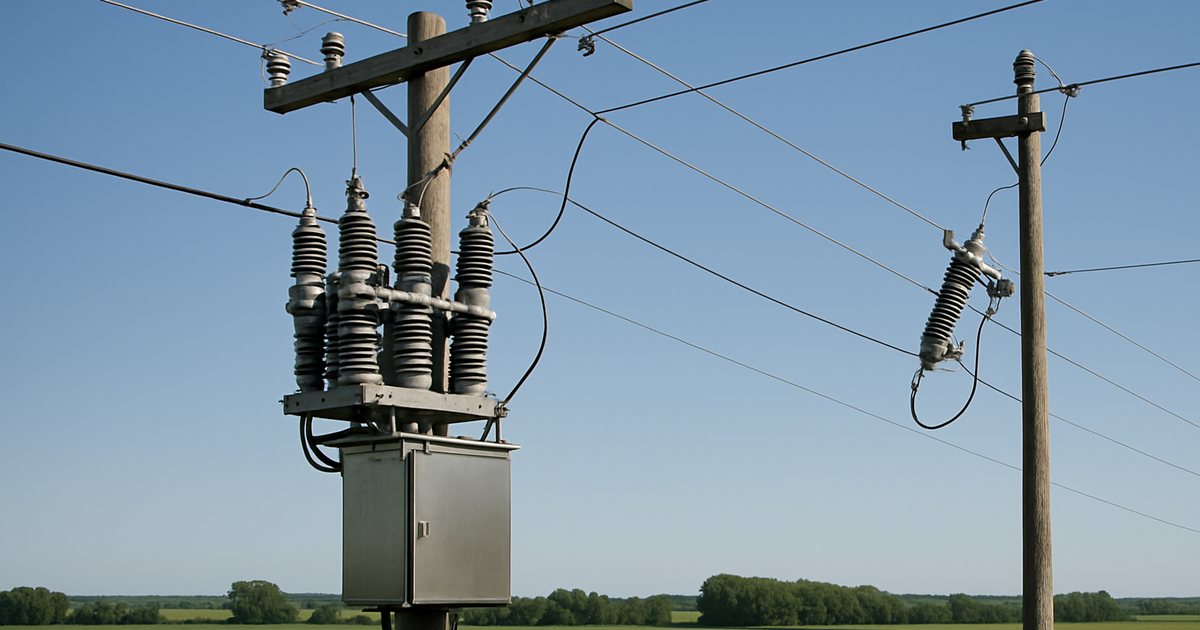
Last Updated: 2026-10-12 · Written by the NAIJI Electric engineering team. We manufacture three-phase pole-mounted reclosers, not cutout-mounted reclosers, and we say so where it matters below.
Key Takeaways
- A TripSaver is a recloser, but a single-phase lateral one: 40/100/200 A continuous, 4.0 or 6.3 kA interrupting, 15.5 or 29 kV maximum. A pole-mounted feeder recloser is typically 630 A and 12.5-20 kA.
- Five hard limits decide the choice before cost does: load above 200 A, fault level above 6.3 kA, three-phase motor loads, three-wire 33 kV systems, and SCADA/FLISR requirements.
- Lateral reclosing pays back in 0.6 years on a 5-mile rural lateral but 12.5 years on a 0.5-mile urban one (CIGRE 2015 inputs). Lateral length and fault rate decide it, not the device price.
Quick Answer: TripSaver or Three-Phase Recloser?
They are not competitors. They protect different parts of the same feeder. Use a three-phase pole-mounted recloser on the main feeder and on large three-phase branches. Use a single-phase cutout-mounted recloser (such as the S&C TripSaver II) instead of a fuse on long single-phase laterals that suffer frequent temporary faults. The "vs" question usually comes down to one decision: should this lateral keep a fuse, get a cutout-mounted recloser, or justify a full three-phase recloser?
The rest of this guide explains how to make that decision with numbers. It covers the ratings each device actually has, the five hard limits, the payback formula, why the answer changes between North American and IEC-style grids, and what changes in wildfire season.
What a TripSaver Actually Is (The Spec Sheet, Not the Brochure)
TripSaver® is S&C Electric Company's brand of cutout-mounted recloser. It is a self-powered, microprocessor-controlled, single-phase vacuum interrupter that hangs in a fuse cutout mounting exactly where a fuse holder would go. There are no batteries and no separate control cabinet. When a fault persists to the end of its sequence, it drops open like an expulsion fuse, so a line crew can see from the ground that it has operated.
Here is what S&C's own Specification Bulletin 461-33 lists for the TripSaver II:
| Parameter | TripSaver II (15 kV class) | TripSaver II (25 kV class) |
|---|---|---|
| Maximum voltage | 15.5 kV | 29 kV |
| BIL | 110 kV | 125 or 150 kV |
| Continuous current | 40 / 100 / 200 A | 40 / 100 / 200 A |
| Interrupting rating (sym.) | 4,000 or 6,300 A | 4,000 or 6,300 A |
| Minimum trip current | 5 A (40/100 A units), 10 A (200 A units) | Same |
| Trip operations per sequence | Up to 4, user-configurable TCCs | Up to 4 |
| Weight | 23 lb (10.4 kg) | 25 lb (11.3 kg) |
| 50 Hz use | Requires the 50 Hz microprocessor control option ("-F" suffix) | |
| End of interrupter life | Locks open; unit is returned to S&C for service | |
Two details in that bulletin matter more than the headline ratings. First, the 25 kV, 150 kV BIL models can protect single-phase-to-neutral circuits only on solidly grounded (multi-grounded-neutral) 34.5 kV systems. Second, it offers a Sectionalizing mode, so the same unit can count upstream breaker operations instead of reclosing itself. Both come back later in this guide.
What a Three-Phase Pole-Mounted Recloser Is
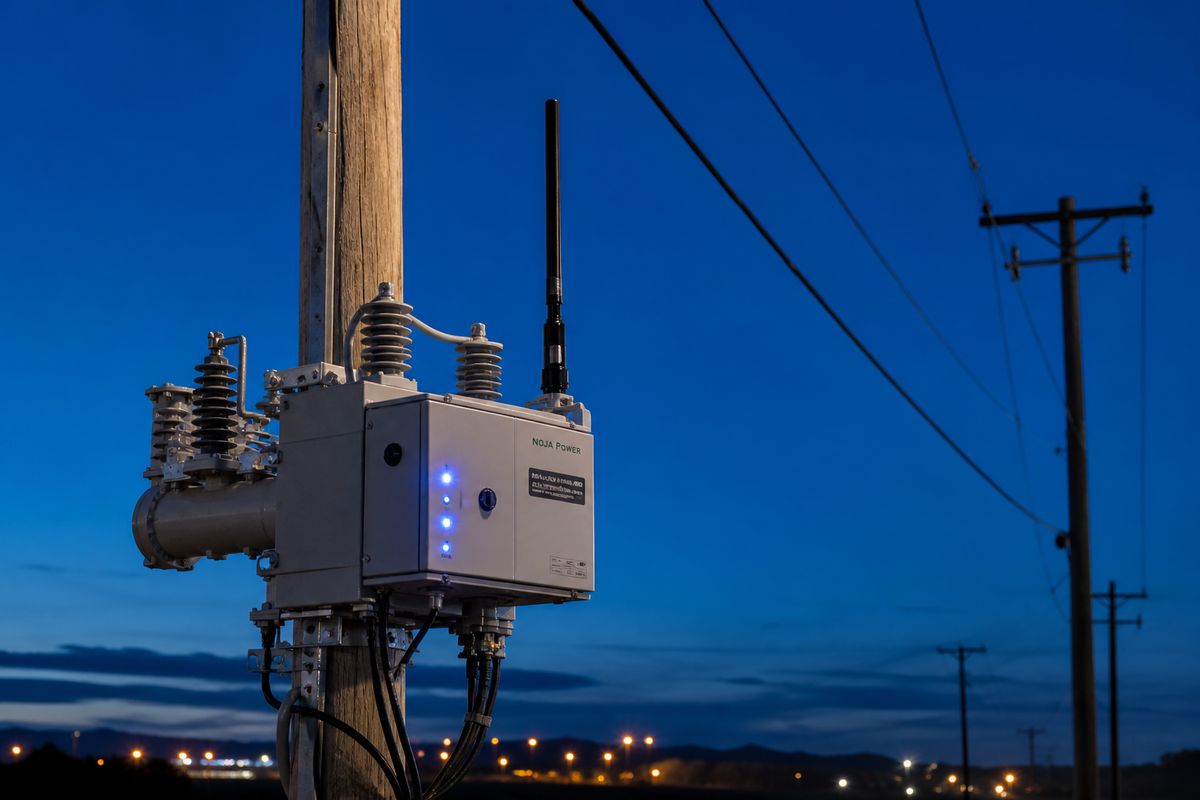
A three-phase recloser is a feeder-class device. It has three vacuum interrupter poles operated together, built-in CTs, a separate electronic controller with directional, earth-fault and sensitive-earth-fault elements, and usually a communication module for SCADA. It is the device you put at the substation exit, at the midpoint of a long feeder, or at the head of a large three-phase branch. For the full mechanism, see our distribution recloser guide.
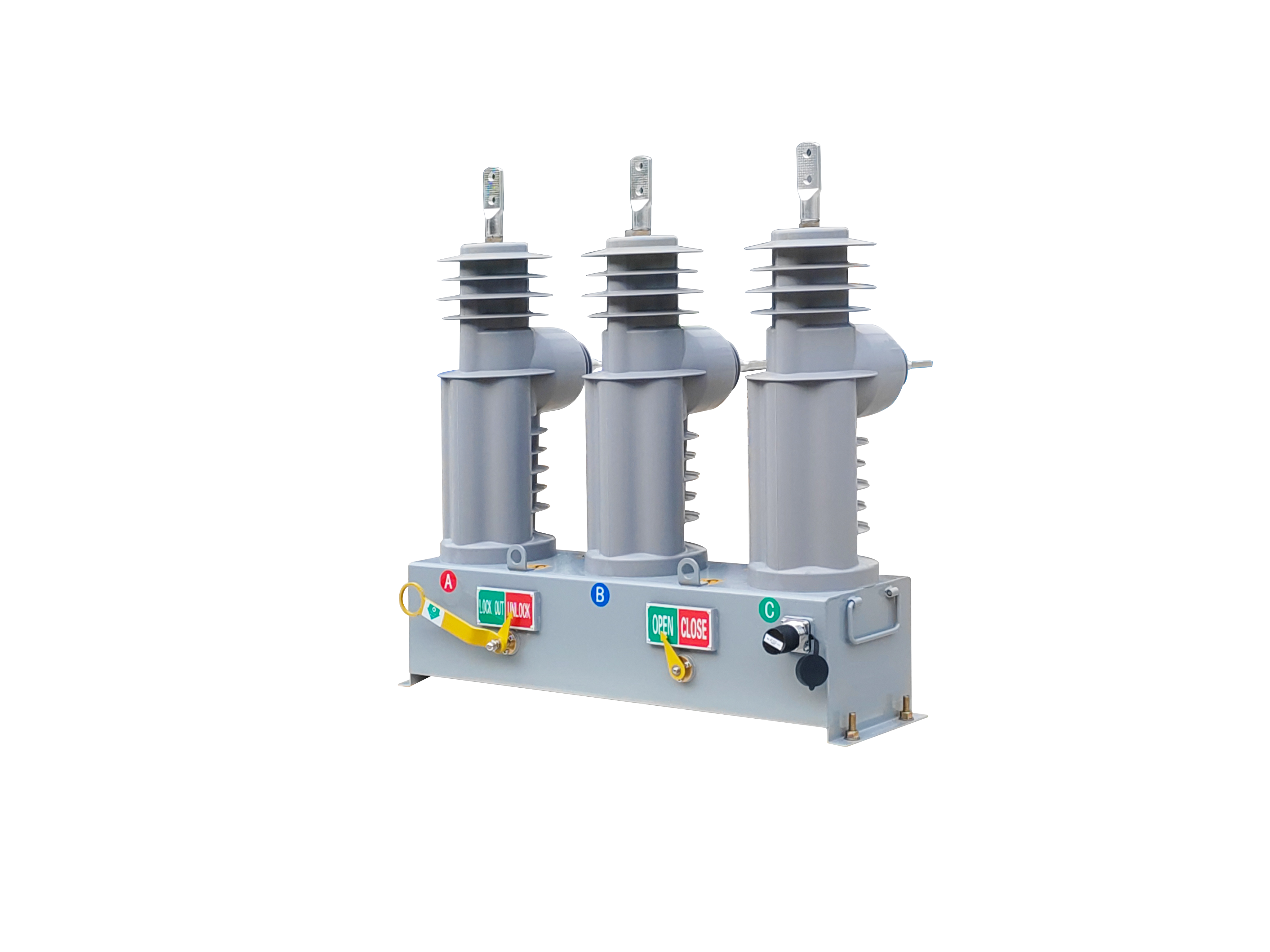
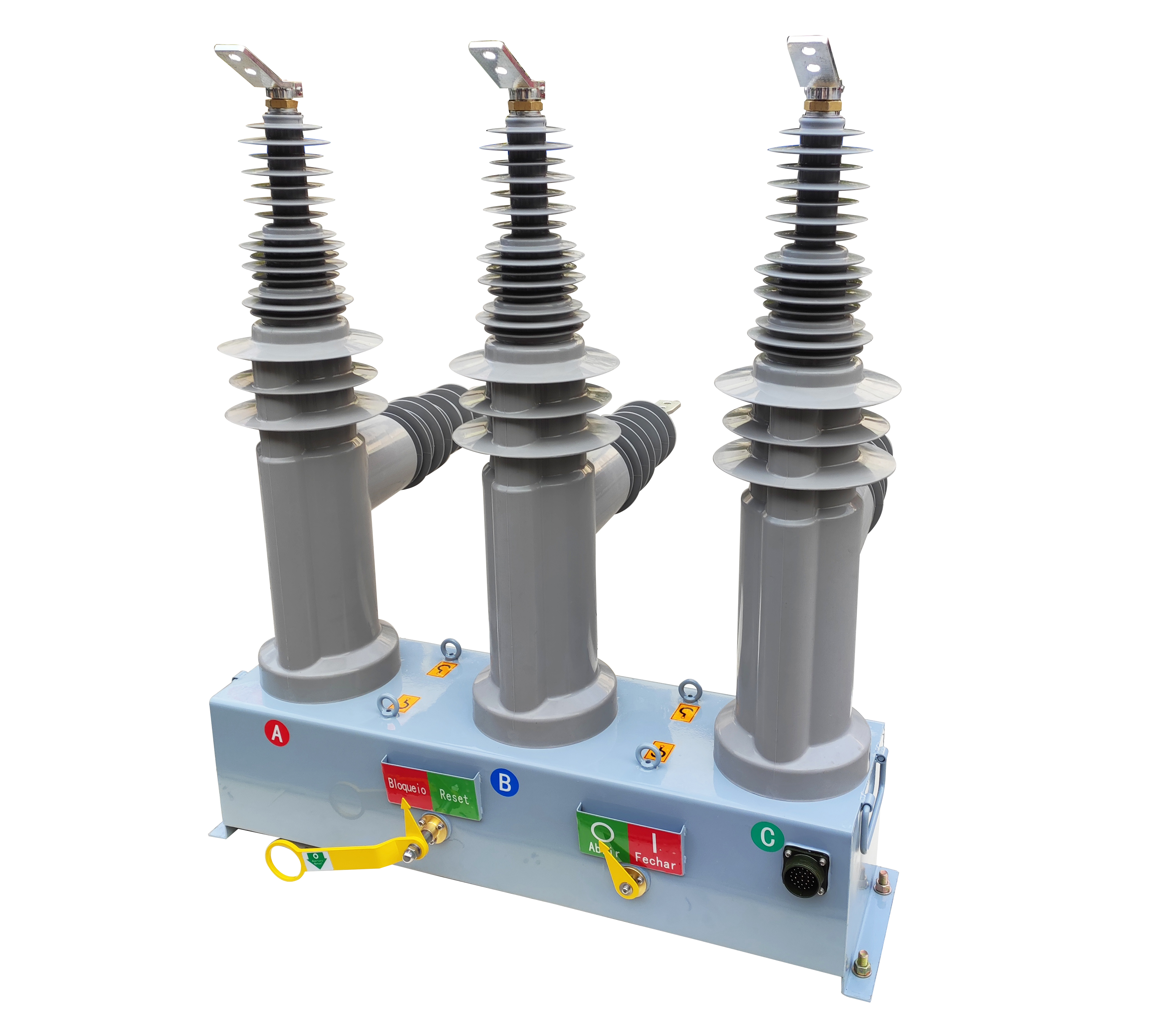
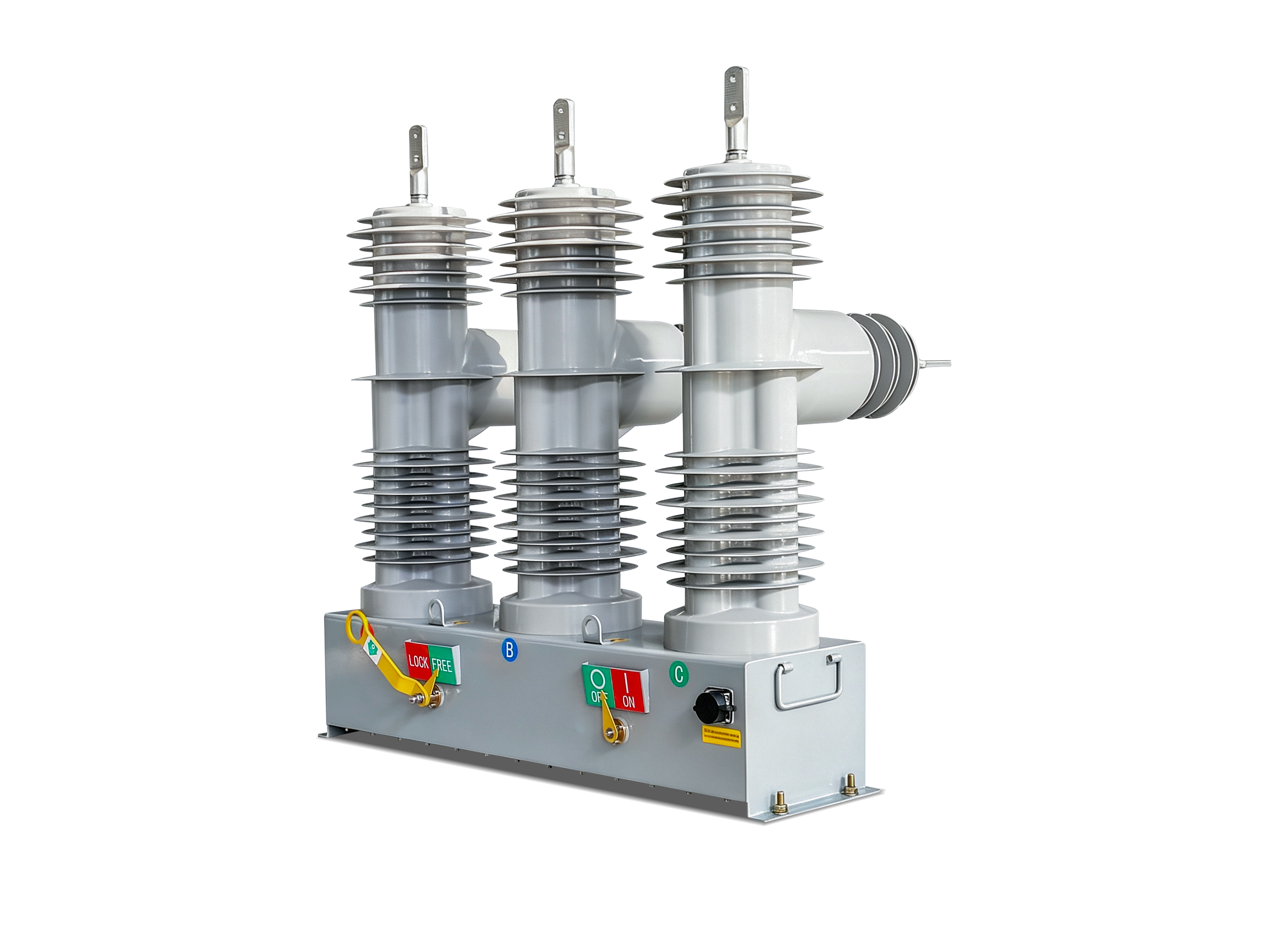
Our outdoor auto recloser series covers the three common IEC distribution voltages: 15.5 kV for 11 kV systems, 27 kV for 24 kV, and 38 kV for 33 kV. Each is rated 630 A, has 10,000 mechanical operations, a permanent-magnet actuator, partial discharge ≤20 pC, IP65/IP67, -40 °C to +45 °C, and complies with IEC 62271-111 and IEEE C37.60. Our integrated 12 kV ZW32-12F unit is rated 20 kA short-circuit breaking.
Head-to-Head: Cutout-Mounted vs Three-Phase Recloser
| Dimension | Cutout-mounted (e.g. TripSaver II) | Three-phase pole-mounted recloser |
|---|---|---|
| Phases interrupted | 1 (each phase independent) | 3, ganged (single-phase-trip models exist) |
| Continuous current | 40-200 A | Typically 400-800 A (NAIJI: 630 A) |
| Interrupting rating | 4.0 or 6.3 kA | Typically 12.5-20 kA (NAIJI ZW32-12F: 20 kA) |
| Voltage classes | 15.5 kV and 29 kV max | 15.5 / 27 / 38 kV |
| Control power | Self-powered from line current | PT, solar + battery, or auxiliary supply |
| Protection functions | Phase overcurrent TCCs, sequence coordination, sectionalizing mode | Phase, earth fault, SEF, directional, cold-load pickup, multiple setting groups |
| Communications | Optional gateway (DNP3) | Standard or optional: 4G/fiber, DNP3, IEC 60870-5-104, IEC 61850 |
| FLISR / automation | Limited | Core use case |
| Installation | Hot-stick into an existing cutout mounting | Pole frame, bypass/isolating switches, arresters, controller cabinet |
| Weight | 10.4-11.3 kg | 100+ kg class plus control cabinet |
| Best location | Long single-phase laterals with frequent temporary faults | Main feeder, midpoint, large three-phase branches |
Need help choosing for a specific feeder? Send your single-line diagram, fault levels and lateral lengths to our engineering team. We will tell you where a three-phase recloser makes sense, and also where it doesn't.
The 5 Hard Limits That Decide It Before Cost Does
Most "TripSaver vs recloser" questions are settled by ratings before anyone opens a price list. If any of these five is true at the location, a single-phase cutout-mounted recloser is the wrong device:
1. Load current above 200 A
The largest cutout-mounted rating is 200 A continuous. A three-phase branch serving a pumping station, a sawmill or a small industrial park will often exceed that, especially after load growth. Cold-load pickup after a long outage can push the current higher still.
2. Available fault current above 6.3 kA
Close to a substation, the three-phase fault level on an 11-33 kV feeder is often well above 6.3 kA. A device asked to interrupt more than its rating can fail violently. Check the fault level at the actual installation point. Our short-circuit rating calculation guide shows the method. Cutout-mounted reclosers belong further out, where line impedance has brought the fault level down.
3. Three-phase motor loads downstream
Independent single-phase devices on a three-phase lateral open only the faulted phase. Downstream three-phase motors then run single-phased, overheat, and trip on their own protection or burn out. S&C's communication gateway can send drop-open signals to up to three units, but that gangs the lockout, not every trip-and-reclose operation. Where motors matter, use a three-phase recloser with ganged tripping.
4. Three-wire 33 kV (and most 22/24 kV IEC) systems
The 29 kV maximum and the phase-to-neutral-only restriction on 34.5 kV multi-grounded-neutral systems rule out most 33 kV networks in IEC markets. These are typically three-wire, with no distributed neutral. That is why we make the 38 kV outdoor auto recloser. It is the device class 33 kV utilities across Africa, the Middle East and South Asia actually specify.
5. You need SCADA visibility, directional or sensitive earth-fault protection
High-impedance earth faults (a conductor lying on dry ground) and back-fed faults from embedded solar need SEF and directional elements. Self-powered cutout devices don't have them. If the location is a FLISR switching point, it needs a full controller.
Fuse Saving vs Fuse Blowing vs Lateral Reclosing
About 70-80% of faults on overhead distribution are temporary: vegetation contact, animals, lightning flashover. How you handle them on laterals is a philosophy choice, and each philosophy has a cost.
| Strategy | What happens on a temporary lateral fault | Main feeder customers | Lateral customers | Reliability index hit |
|---|---|---|---|---|
| Fuse blowing | Lateral fuse melts; crew must replace it | No interruption | Sustained outage until crew arrives | SAIFI / SAIDI |
| Fuse saving | Feeder breaker/recloser trips fast on shot 1, fuse survives | Momentary blink on every lateral fault | Momentary blink | MAIFI |
| Lateral reclosing | Cutout-mounted recloser at the tap trips and recloses | No interruption | Momentary blink | Lowest combined |
Fuse saving also fails more often as fault levels rise. When the upstream recloser can't beat the fuse's melting curve, the fuse blows and the feeder blinks: the worst of both outcomes. That is the main technical case for moving the reclosing point to the lateral itself. For how a sectionalizer fits into the same scheme, see recloser vs sectionalizer.
The Payback Math: When Is Lateral Reclosing Worth It?
A 2015 CIGRE US National Committee paper by S&C engineers (Chen et al.) modelled interruption costs for each strategy. It is a vendor-authored paper, so treat the conclusions with care. The method is useful anyway because it is transparent, and you can rerun it with your own numbers:
Payback (years) = installed cost ÷ (lateral length × faults per length per year × temporary-fault share × truck-roll cost)
| Topology (CIGRE inputs) | Avg. lateral length | Truck roll | Fuse replacements avoided / lateral / yr | Annual saving / lateral | Payback at USD 2,500 installed |
|---|---|---|---|---|---|
| Urban | 0.5 mi (0.8 km) | $500 | 0.4 | $200 | 12.5 years |
| Suburban | 1.0 mi (1.6 km) | $500 | 0.8 | $400 | 6.3 years |
| Exurban | 2.5 mi (4.0 km) | $750 | 2.0 | $1,500 | 1.7 years |
| Rural | 5.0 mi (8.0 km) | $1,000 | 4.0 | $4,000 | 0.6 years |
Inputs: 1.0 fault per lateral-mile per year, 80% temporary. The per-lateral figures above reproduce the paper's feeder-level payback numbers exactly. The table only counts utility truck-roll costs. Customer interruption costs, and regulatory outage penalties where they exist, make the rural case stronger.
What the formula tells you: at a USD 2,500 installed cost, a 3-year payback needs about USD 830 a year of avoided truck rolls. That is roughly one avoided fuse replacement a year on a remote lateral. Below that, keep the fuse. Above it, a cutout-mounted recloser is easy to justify. At several times that figure, on long feeders serving many laterals, the conversation moves to adding a midline three-phase recloser as well.
Why the Answer Changes Between North American and IEC Grids
Cutout-mounted reclosers were designed for the North American grid. That grid is a four-wire, multi-grounded-neutral wye system where most customers hang off single-phase laterals tapped from a three-phase backbone through fuse cutouts. There, every lateral is a candidate, and the device fits hardware utilities already stock.
Many networks our customers run look different:
- Three-wire 11 kV and 33 kV systems (common across Africa, the Middle East, South Asia and parts of Southeast Asia). Spurs are usually three-phase, or two-phase between lines, feeding three-phase distribution transformers. There is no neutral for a phase-to-neutral device.
- SWER (single-wire earth return) in Australia, New Zealand and parts of Africa and Brazil. These are single-phase lines, but often at 12.7 or 19.1 kV to earth with their own protection practice.
- Latin American 13.8 and 34.5 kV multi-grounded systems. These are structurally closer to North America, which is why Brazilian utilities such as COPEL report large SAIDI gains from lateral reclosing.
The practical rule for export projects: if your network has no multi-grounded neutral, the lateral-reclosing decision becomes a decision about where to place three-phase reclosers and sectionalizers. A typical layout is one at the substation exit, one at the feeder midpoint, and one at the head of each long three-phase branch, with sectionalizers or vacuum fault interrupters below them.
Wildfire Season: Non-Reclose Settings and Fire-Risk Strategy
Reclosing works because most faults are temporary. In fire country, though, each reclose into a branch lying on a conductor is another chance to start an ignition. Fire-prone utilities have responded with seasonal or weather-triggered settings. PG&E's Enhanced Powerline Safety Settings (EPSS), in use since 2021, is the best-known example: reclosing is disabled and devices trip fast, once, to lockout on high-risk days.
| Capability | Cutout-mounted recloser | Three-phase recloser |
|---|---|---|
| Non-reclose mode | Mechanical NR lever, operated from the ground with a hot stick (TripSaver II) | Controller setting group, switchable locally or by SCADA |
| Fast / instantaneous curve in NR | Yes (dedicated NR TCC) | Yes, plus definite-time and SEF elements |
| Fleet-wide switch on a red-flag day | Needs a crew visit per device, unless a gateway is fitted | Remote, minutes |
| High-impedance (downed conductor) detection | No | SEF, and advanced algorithms on some controllers |
For a fire-risk strategy, the deciding factor is usually how fast you can change settings across the whole feeder, not the interrupter. That favours remotely controllable three-phase reclosers at sectionalizing points, with single-phase devices on laterals set to non-reclose for the season.
Decision Matrix: What Goes Where on a Feeder
| Location | Typical conditions | Recommended device |
|---|---|---|
| Substation exit | Highest fault level, full feeder load | Feeder breaker or three-phase recloser (12.5-20 kA, 630 A+) |
| Feeder midpoint (long rural feeder) | 5-20 km out, mixed load | Three-phase recloser with communications |
| Large three-phase branch, motor loads | >200 A or three-phase motors | Three-phase recloser, or sectionalizer below a recloser |
| Long single-phase lateral, trees, MGN system | <200 A, fault level <6.3 kA, frequent temporary faults | Cutout-mounted single-phase recloser |
| Short urban lateral | Low fault rate, quick crew access | Keep the fuse |
| 33 kV three-wire network, any branch | No neutral | 38 kV three-phase recloser + sectionalizers |
What to Put in an RFQ for a Three-Phase Recloser
If the matrix points you to a three-phase recloser, these are the items that decide the price and lead time. Missing items are where quotes from different suppliers stop being comparable:
- System voltage, earthing method and frequency. These set the voltage class: 15.5, 27 or 38 kV.
- Maximum load current, and three-phase fault level at the installation point.
- Ganged or independent-pole mechanism. Independent poles are preferred on many export projects.
- Controller protection functions: directional, SEF, cold-load pickup, number of setting groups.
- Communication protocol (DNP3, IEC 60870-5-104, IEC 61850) and media (4G, fiber, radio).
- Control power source: PT, solar plus battery, or auxiliary supply.
- Mounting frame, bypass and isolating switches, surge arresters included or excluded.
- Pollution level and altitude. Our 15.5 kV model, for example, is rated for pollution level IV and altitudes up to 2,000 m.
As a budget guide, a 12 kV three-phase pole-mounted vacuum recloser with a basic controller typically costs USD 3,000-8,000 FOB. With communications, directional protection and a weatherproof control cabinet it is typically USD 8,000-15,000. Installation and pole hardware are extra. If you also need ground-level isolation or sectionalizing, see our pole-mounted vacuum circuit breaker selection guide.
Related guides: What Is a Distribution Recloser? | Recloser vs Sectionalizer | Vacuum Fault Interrupter (VFI) Guide | Short-Circuit Rating Calculation
Request a quote for 15.5 / 27 / 38 kV auto reclosers. Send your system voltage, fault level and controller requirements to NAIJI Electric. We reply within 12 hours with a datasheet and FOB pricing. See the full range on our auto recloser product page, including the 15.5 kV and 27 kV models.
TripSaver® is a registered trademark of S&C Electric Company. NAIJI Electric is not affiliated with S&C Electric Company. TripSaver II ratings are taken from S&C Specification Bulletin 461-33. Payback inputs are from Chen et al., "Interruption Costs for Different Lateral Protection Strategies," CIGRE US National Committee, 2015.